
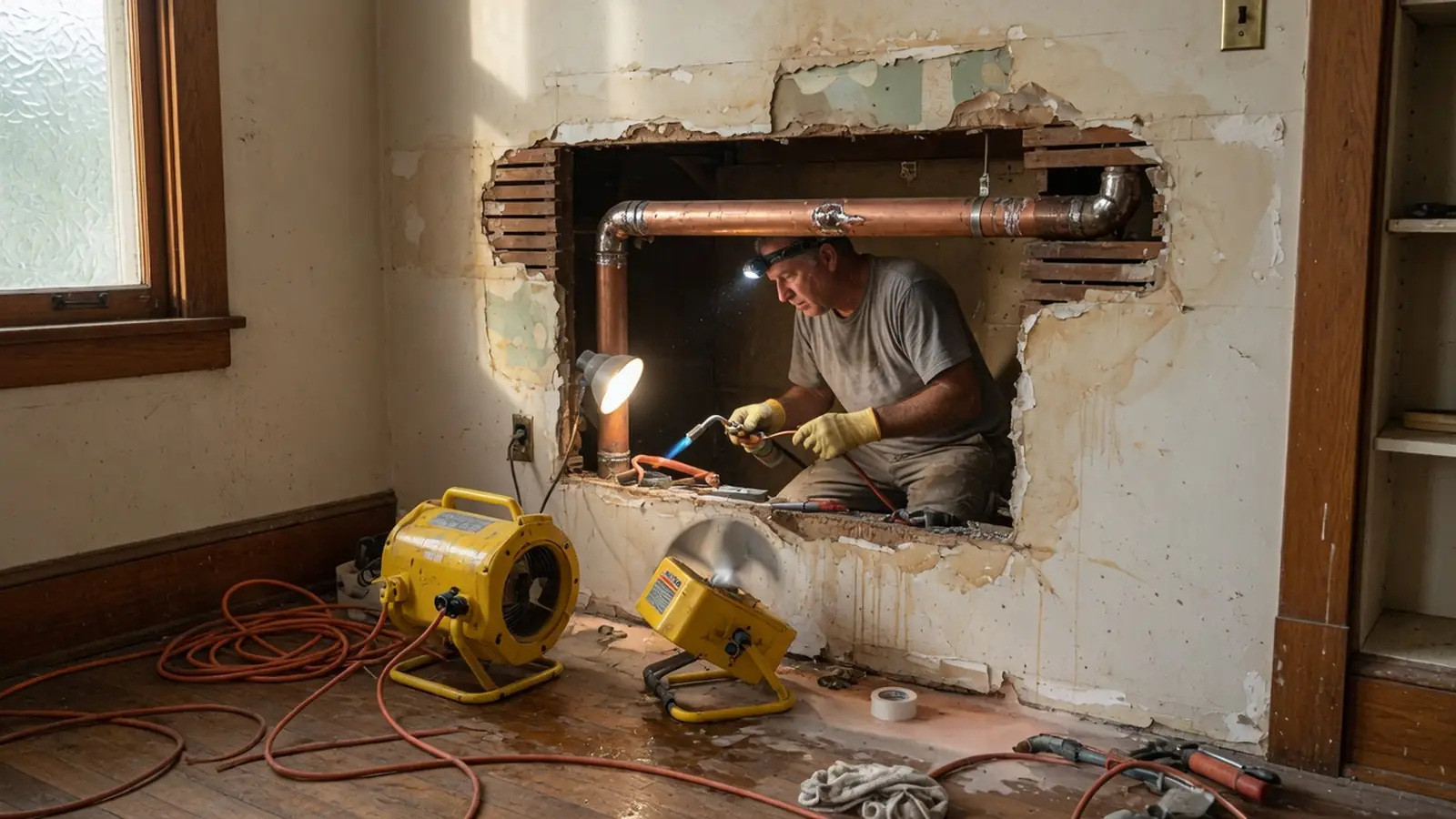
Vancouver Storm Damage
Late autumn atmospheric rivers around the Columbia River basin deliver intense rainfall that easily overwhelms residential gutters and drives surface runoff toward foundations. Our emergency technicians secure compromised rooflines, pump flooded basements, and deploy industrial dehumidifiers to halt structural decay. We document every phase of drying to streamline your insurance claims.
Call (360) 555-0147 for an open roof or active flooding.
Prefer to talk? (360) 555-0147
Dedicated Storm Recovery And Structural Drying
Severe wind and rainstorms regularly challenge building exteriors along the Pacific Northwest corridor.
When storm fronts compromise building envelopes, homeowners rely on us to dispatch professional emergency water mitigation crews immediately.
The median owner-occupied home across our regional community was built in 1986 (Census ACS 5-year), meaning many structures have aging plumbing and roof flashing.
Our local jurisdiction has 80,754 housing units on record in the Census ACS 5-year estimates.
About 24% of housing units (19,139 of 80,754) were built since 2000, so a substantial share of the local stock is still on its original systems.
Our technicians use commercial air movers, thermal cameras, and desiccant dehumidifiers to extract water before structural timbers degrade.
Every restoration project includes thorough moisture mapping, post-drying verification, and detailed documentation for your insurance provider.
Our Step-by-Step Storm Recovery Process
When gales breach the exterior envelope, extensive standing water collects beneath homes following heavy rainfall, raising urgent concerns about pump-outs, structural wood rot, and subfloor drying. If heavy runoff pools in the substructure, our technicians extract standing crawl space water and inspect structural timbers before drying equipment runs.
- Envelope Stabilization And Board-Up. Emergency roof tarping and window board-up must occur before deploying dehumidifiers to prevent continuous outdoor moisture from undermining structural drying goals. We secure punctured roofing materials, cover broken windows, and divert exterior flows away from exterior walls.
- Water Extraction And Structural Evacuation. Homeowners often describe how mopping up indoor flood water without commercial air movers and dehumidifiers results in active mold colonies spreading behind drywall and beneath flooring. We utilize truck-mounted extractors and submersible pumps to remove bulk water from floors and wall cavities.
- Perimeter Drainage And Soil Stabilization. As highlighted in field trade videos, contaminated mud and sludge excavated from drainage trenches must be replaced with three-quarter inch crushed rock to guarantee free drainage. We inspect perimeter drain lines and clear storm debris so future rainfall flows away freely.
- Controlled Dehumidification And Verification. We install commercial LGR dehumidifiers and high-velocity air movers to pull trapped moisture out of wall studs, subfloors, and joists. Our technicians log daily psychrometric readings to verify that every material reaches dry standards before completing the job.
Comprehensive Storm Protection And Moisture Defense
Practical experience shared in professional drain diagnostics confirms that extracting standing water from a crawl space provides only temporary relief if blocked exterior drain tiles are not properly flushed. We apply antimicrobial treatments and recommend that you explore certified mold remediation procedures whenever hidden dampness persists behind wet drywall. Our technicians strictly follow IICRC S500 water restoration guidelines, ensuring structural assemblies dry thoroughly while safeguarding indoor air quality.
Emergency Roof Tarping And Tree Damage Repair
Hail activity across the regional county is uneven year to year: 2023 logged 3 radar signatures while 2021 logged only 0, a 3.0x spread. When sudden squalls compromise shingles, our team installs reinforced waterproof tarps to seal punctures and prevent interior ceiling collapses.
Foundation Perimeter And Flood Mitigation
Downspouts emptying directly into aging, unmaintained clay drain tiles without clean-outs cause perimeter backups and foundation weeping during storms. We clear blocked drainage paths, install temporary diversion lines, and pump water away from vulnerable crawl spaces.
Attic And Interior Moisture Remediation
A frequent pattern echoed in public discussions is that faulty bathroom exhaust venting releases warm, humid air directly into attics, generating extensive mold growth across the underside of the roof deck. We dry roof sheathing, treat microbial pockets, and balance ventilation to protect structural attic timbers.
Our Commitment To Rapid Regional Storm Recovery
We operate with specialized structural drying equipment and continuous moisture monitoring to protect local properties following severe weather. Every project follows strict restorative standards without cutting corners.
- 11Zip Codes Served
- 7Service Areas
- 3Services Offered
Local property owners count on our rapid response when wind and heavy rainfall threaten their homes. Here is what residents say about how our technicians managed storm recovery on their properties.
“High winds knocked tree branches across our driveway, blocking access right as floodwaters surged toward our garage. The crew arrived with clearing equipment, cleared the path safely, and still finished structural drying ahead of schedule. Their quick recovery under tough conditions saved our subflooring.”
Marcus T.
“Our elderly mother stays in the main-floor bedroom, so we were stressed about noisy drying equipment after water seeped past our siding. The technicians routed air lines with extreme care, set up sound baffling, and checked on her comfort every morning. They made a chaotic situation completely manageable.”
Brenda K.
“Another contractor gave us a cheaper quote but only wanted to extract surface water and lay box fans over wet baseboards. This team showed us why full cavity dehumidification and moisture meters were necessary to prevent rot behind the walls. Choosing them kept our home safe from hidden microbial decay.”
Derrick H.
“When storm runoff overwhelmed our exterior drainage and damaged our foundation sill, the team walked the building inspector through their structural stabilization plan. Every detail complied with local moisture barrier codes on the first pass without delays. Having experienced pros manage the municipal paperwork took a huge weight off our shoulders.”
Elena S.
Frequently Asked Questions
How quickly should storm damage mitigation begin after severe weather?
Storm damage mitigation should begin within 24 to 48 hours to halt water migration, protect framing, and prevent rapid secondary mold growth. Lingering moisture quickly penetrates subflooring and drywall assemblies, turning salvageable materials into structural hazards.
Why must roof tarping and window board-up happen before interior drying?
Emergency roof tarping and window board-up must occur before deploying dehumidifiers to prevent continuous outdoor moisture from entering the home. If breaches in the building exterior remain unsealed, outside humidity constantly replaces indoor air, undermining commercial structural drying goals.
How does saturated crawl space water affect residential structural framing?
Standing water beneath homes after heavy storms demands immediate pumping to prevent progressive structural wood rot and subfloor buckling. Extensive standing water collects beneath homes following heavy rainfall, raising urgent concerns about pump-outs, structural wood rot, and subfloor drying.
Can DIY mopping resolve indoor water intrusion after severe storms?
Mopping surface water without commercial air movers and dehumidifiers leaves hidden moisture that fuels rapid microbial growth in wall cavities. Homeowners often describe how surface wiping fails because water migrates beneath baseboards, requiring commercial moisture detection and cavity drying.
Why do foundation perimeters back up during intense regional storms?
Downspouts emptying into aging clay drain tiles without clean-outs cause heavy perimeter backups and persistent foundation weeping during storms. When storm runoff exceeds perimeter capacity, hydrostatic pressure forces water through cold joints and foundation cracks into crawl spaces.