
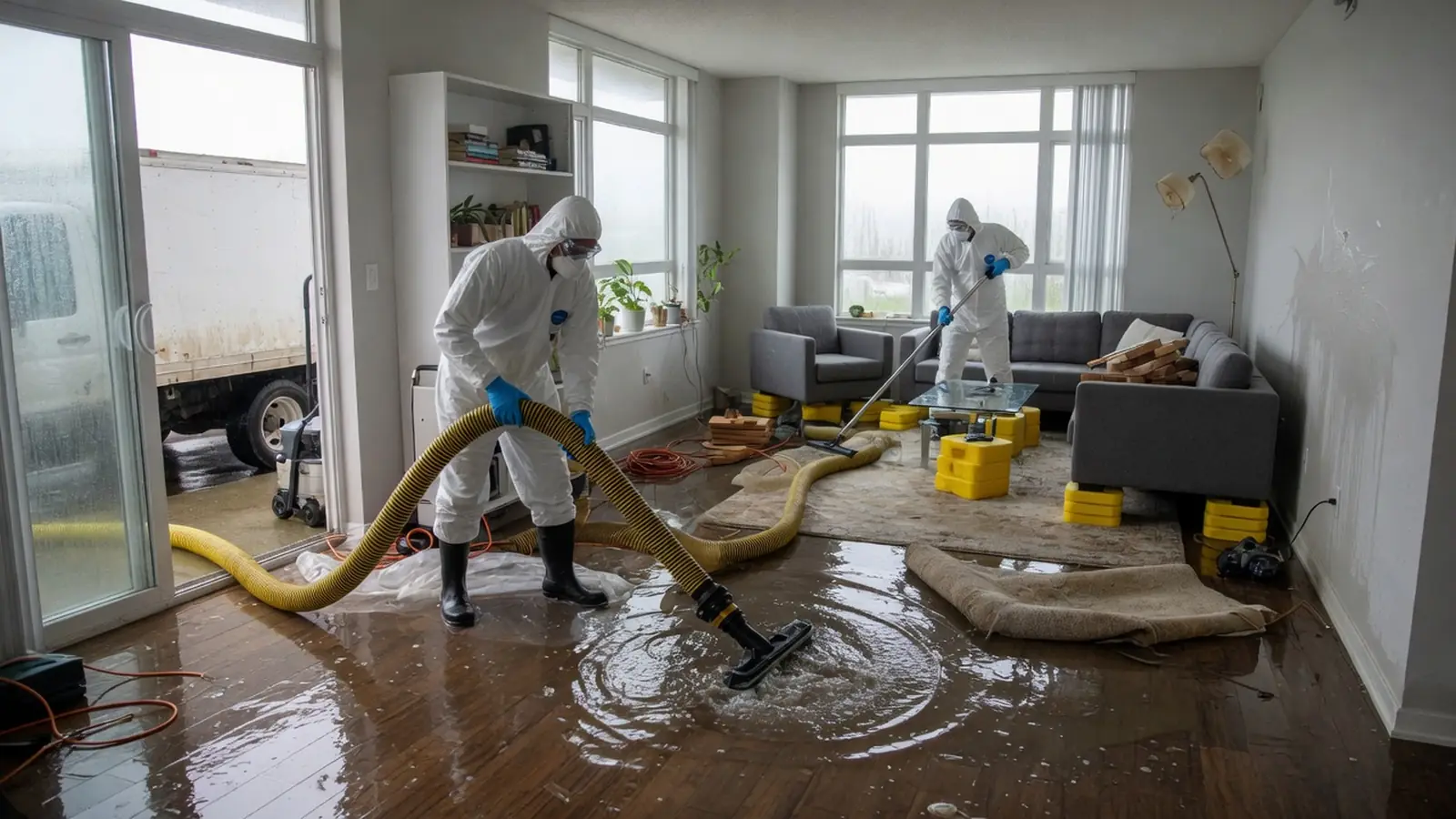
Emergency Water Damage Restoration Vancouver WA
Standing water destroys subflooring and framing within hours if left unaddressed. Our certified mitigation technicians deploy commercial extractors and structural drying systems to stabilize residential and commercial properties immediately. We protect historic structures and modern foundations against long-term moisture degradation.
If water is still coming in, call (360) 555-0147.
Prefer to talk? (360) 555-0147
Dedicated Structural Restoration Specialists
Our certified technicians specialize in emergency water extraction, structural desiccant drying, and moisture stabilization for residential and commercial properties.
When severe weather strikes, homeowners often describe how extensive standing water collects beneath homes following heavy rainfall, demanding industrial pump-outs before rot attacks the framing.
About 16% of housing units in the local area (12,808 of 80,754) were built before 1960, the era of galvanized steel supply lines and cast iron drains that frequently suffer catastrophic line ruptures.
About 8% of housing units in the local area (6,074 of 80,754) were built in the 1960s, overlapping the years aluminium branch wiring was installed, which demands strict electrical safety protocols during emergency pump-outs.
About 31% of housing units in the local area (25,036 of 80,754) were built in the 1970s and 1980s, overlapping the years polybutylene supply piping was commonly installed and prone to sudden joint failure.
About 54% of housing units in the local area (43,918 of 80,754) were built before 1980, the period when asbestos-containing materials and lead paint were still in use, requiring regulated containment during tear-out.
Our crew utilizes hospital-grade air scrubbers and calibrated moisture meters to safeguard living spaces throughout every mitigation project.
Four Steps To Complete Moisture Recovery
A pattern echoed in public discussions is that sudden roof failures during active storms trigger rapid ceiling water intrusion and sagging drywall, demanding immediate containment to prevent broader structural damage. If you need rapid storm damage mitigation after structural water penetration, our team mobilizes within minutes to secure the envelope.
- Immediate Extraction And Water Categorization. Technicians evaluate the source of intrusion to determine whether wind-driven rain that enters through damaged siding or roof decking classified as contaminated water requiring drywall removal applies to your structure. We extract standing bulk water rapidly with truck-mounted vacuum units to arrest capillary wicking across wall assemblies.
- Targeted Removal And Environmental Safety. Damaged drywall, saturated insulation, and non-salvageable subfloors are removed under negative air pressure. We protect indoor air quality by following strict containment guidelines when encountering legacy building materials common to mid-century structures.
- Industrial Drying And Perimeter Control. In local forums, property owners frequently note that downspouts emptying directly into aging, unmaintained clay drain tiles without clean-outs cause perimeter backups and foundation weeping during storms. We position low-grain refrigerant dehumidifiers and high-velocity air movers to extract embedded moisture from sill plates and subflooring.
- Thermal Verification And Claim Documentation. Technicians perform daily moisture mapping with infrared cameras and deep-probe meters until equilibrium moisture content is achieved. Property owners facing significant water damage struggle to decide whether to self-pay mitigation costs or file a claim that could trigger steep insurance rate hikes, so we provide detailed dry logs and itemized photographic inventories for either path.
Science-Based Structural Drying
The single most extensive soil unit mapped around our regional territory is Hesson clay loam, 0 to 8 percent slopes, covering about 24,500 acres of WA011, which creates dense, slow-draining conditions that trap runoff against crawl space stem walls. Severe seasonal storms exacerbate this pressure; NOAA radar recorded 3 hail signatures within about 15 miles locally between 2021-2025 (2021: 0, 2022: 0, 2023: 3, 2024: 0, 2025: 0). The heaviest recent hail year around our regional territory was 2023, with 3 radar hail signatures inside a 15-mile radius that compromised roofing membranes and initiated cascading water intrusion. We stabilize properties using psychrometric drying standards, verifying that deep framing reaches normal moisture content before signing off.
Emergency Water Extraction
High-volume truck-mounted extraction units remove pooling water from flooring, basements, and crawl spaces within hours. Fast removal prevents secondary microbial amplification and saves structural framing.
Structural Cavity Drying
Commercial desiccant and refrigerant dehumidifiers circulate dry air through wall cavities, joists, and subfloors. Continuous psychrometric monitoring ensures complete moisture evaporation without warping solid woods.
Burst Pipe & Storm Containment
Rapid containment stops internal plumbing ruptures and roof-breach leaks from traveling across ceiling spans. We secure the building envelope and isolate damaged zones to protect unaffected living areas.
Our Commitment To Verified Structural Drying
Every water loss requires immediate physical extraction and rigorous atmospheric control. We follow strict psychrometric logging to ensure your building materials return to safe equilibrium levels before any reconstruction begins.
- 11Zip Codes Served
- 8Service Areas
- 3Services Offered
Read genuine feedback from local property owners who experienced emergency water intrusion and relied on our prompt structural mitigation.
“Three months after our main-level pipe burst, our hardwood subfloors remain completely level and odor-free. The crew monitored moisture levels daily until the structural beams were back to safe readings before pulling their blowers. We have had zero mold issues or cupping boards all winter.”
Marcus B.
“Our elderly mother lives with us and uses a walker, so having noisy equipment running through the halls was a major concern. The technicians taped down all cables flat, routed their drying ducts away from her bedroom, and checked in quietly each morning. They showed remarkable compassion while saving our flooded hallway and living room.”
Elena R.
“Another outfit gave us a lower estimate over the phone but admitted they would not remove the wet baseboards or check behind the insulated exterior walls. This team brought thermal cameras that revealed water trapped deep inside the wall cavity that the other bid would have ignored. Paying for thorough mitigation saved us from an inevitable structural mold nightmare.”
Darren T.
“Because our home was constructed prior to 1980, strict testing protocols were mandatory before disturbing any drywall or textured ceilings. The crew handled all containment barriers and certified sampling seamlessly before beginning demolition, keeping everything fully aligned with regional environmental standards. Their thorough documentation made our subsequent clearance inspection pass without a hitch.”
Gwendolyn P.
Frequently Asked Questions
How fast should water extraction begin to prevent structural damage?
Water extraction must begin within 24 to 48 hours of intrusion to prevent irreversible structural weakening, subfloor delamination, and mold.
Is wind-driven rain through damaged siding considered contaminated water?
Wind-driven rain entering through exterior building assemblies is classified as Category 2 water and typically requires drywall removal.
Should property owners self-pay or file an insurance claim for water losses?
Self-paying is often cost-effective for minor mitigation under your deductible, while severe losses justify filing despite potential premium hikes.
Why does heavy clay soil complicate crawl space moisture drying?
Dense clay soils hold surface water against foundation walls, creating high hydrostatic pressure that seeps continuously into open crawl spaces.
What testing is required before removing wet walls in homes built before 1980?
Homes built before 1980 require certified testing for asbestos and lead paint before technicians disturb or demolish any wet drywall or texture.